
Our Top 6 Favorite Korean Dishes
Updated: Sep 5
Recently, we collaborated with Young Scholars to host a Korean Food Fundraiser. We chose our top favorite Korean dishes to be a part of our menu:
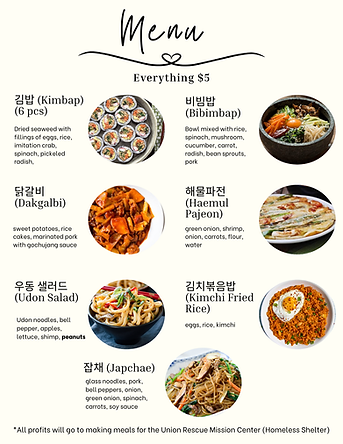
김밥 (Kimbap)
비빔밥(Bibimbap)
닭갈비 (Dakgalbi)
해물파전(Haemul Pajeon)
우동 샐러드 (Udon Salad)
김치볶음밥 (Kimchi Fried Rice)
잡채 (Japchae)
We chose these dishes based on taste, cultural significance, and nutritional value.
김밥 (Kimbap)
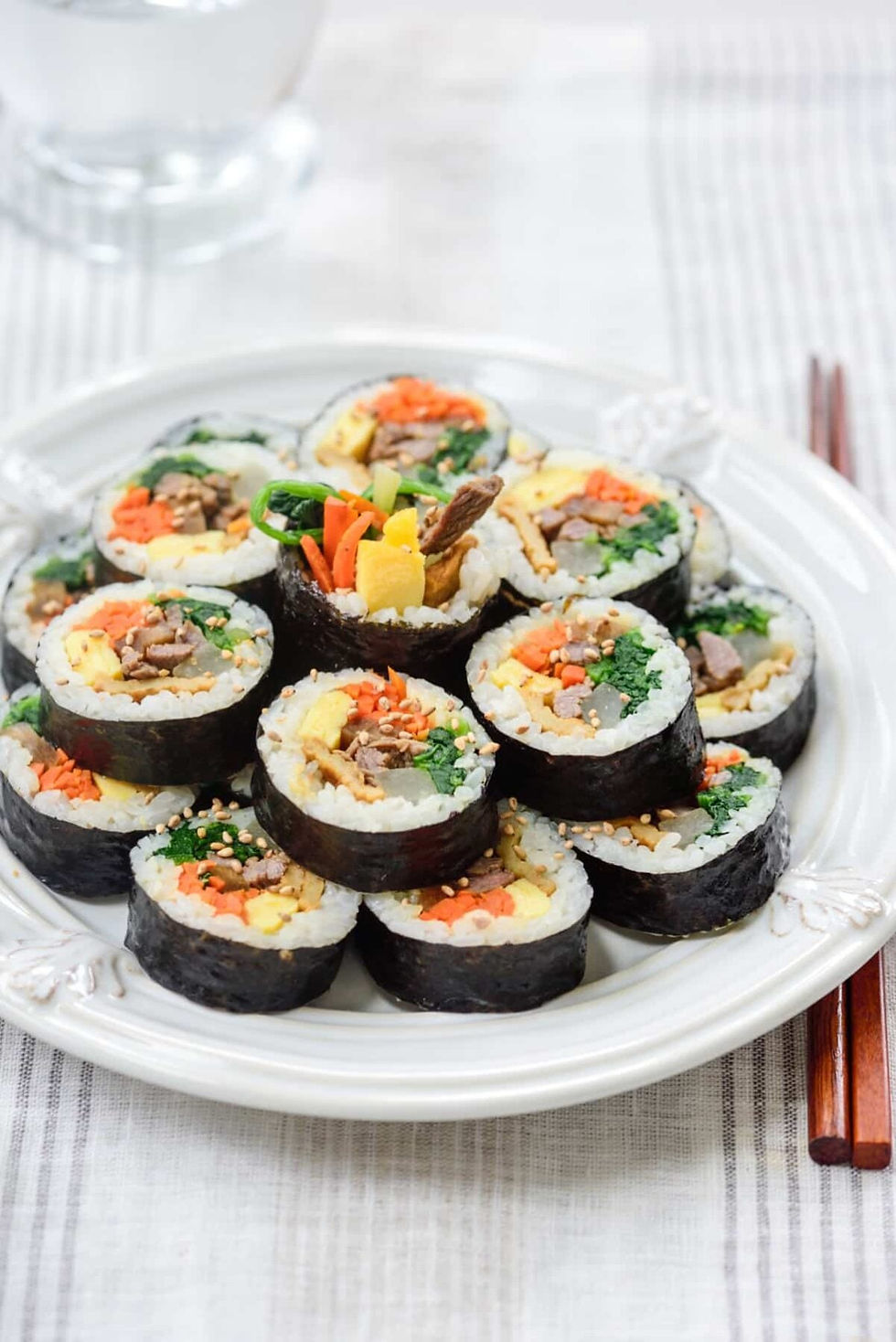
Kimbap, a very popular dish in Korean, is a Korean symbol of portability, communal sharing, and comfort food nostalgia. It can be commonly seen wrapped and ready to be eaten at Korean convenience stores, in students’ and working individuals' lunchboxes, as well as on picnic blankets. Kimbap literally translates to “seaweed rice” (김 = seaweed, 밥 = rice) and is made from rice, vegetables, and sometimes, at the consumer’s preference, cooked seafood or meat. The variety of ingredients and the portability of the roll makes it a healthy and ideal on-the-go meal. To go into more detail, a classic kimbap often consists of dried seaweed sheets, sesame oil seasoned rice, eggs, carrots, 단무지 (danmuji), imitation crab, 우엉 (burdock root), and spinach. These ingredients make kimbap a great way to get necessary nutrients within your diet.
Nutritional value of Kimbap:
Dried seaweed:
Rich source in iodine
This essential trace mineral (essential micronutrients that the human body needs in very small amounts) is used by our bodies to make thyroid hormones (hormones that control our metabolism and regulate energy)
Rice:
Carbohydrates
Fun fact: Eating enough carbohydrates supports muscle growth. Carbohydrates have a protein-sparing effect, meaning they help preserve protein so it can be used for muscle repair and growth instead of being burned for energy. When carbohydrate stores are low, your body relies more on fat for fuel and may also use amino acids to help meet its energy needs. By consuming necessary amounts of carbohydrates, you help ensure that more of the protein you consume can go toward recovery and building muscle—helping you make the most of your time in the gym.
Eggs:
Good source of protein and healthy fats
Spinach:
Rich source in iron
Food source in beta carotene (which our bodies turn into Vitamin A)
Fun Fact: beta carotene in spinach is made more bioavailable (our body absorbs it more) when spinach is boiled
Imitation Crab:
Protein source
Danmuji:
Source of Vitamin C, potassium, and folate
Burdock roots:
Contains a variety of antioxidants and inulin that are known to help with conditions like skin disorders, inflammation, digestion, and more
Fun fact: burdock root has been used food and medicine for centuries
Carrots:
Rich source in beta-carotene
Cultural significance:
As mentioned before, kimbap is a very popular dish in Korea and can be commonly found in picnic settings or as simple on-the-go meals for individuals with busy schedules. This can be seen through its features in many k-dramas such as Extraordinary Attorney Woo Young Woo and Hospital Playlist where the rolls serve as a comfort food and a quick meal to eat before the characters continue on with their busy schedules.
Extraordinary Attorney Woo Young Woo:

Woo Young Woo enjoying her favorite meal before going to work
Hospital Playlist: Chae Songhwa enjoying a roll of kimbap with her friends before the next shift.


It also appears in the show KPOP Demon Hunters
비빔밥(Bibimbap)

Bibimbap literally means “mixed rice” as its name implies it is a bowl of rice mixed with other ingredients that incorporate the five flavors that create balance in a traditional meal: salty, sweet, hot, sour, and bitter. The other ingredients also incorporate the idea of obangsaek: the 5 representative colors of Korean cuisine (red, green or blue, yellow, white, and black) which signify the the five elements (fire, wood, earth, metal and water) and the five positions relating to a compass (south, east, centre, west, and north). They’re also said to correspond to the five main organs of the body (heart, liver, stomach, lungs, and kidneys). As you can see, the dish is a very symbolic dish and represents balance, harmony, and community through its mix of the varying symbols of ingredients.
Origin
This dish originated from the Korean goldongban ritual where people would take their leftovers and mix them to make a meal as a way to clear out their homes at the end of the lunar year, in preparation for the next.
Present
This dish is now enjoyed as an everyday meal for lunch or dinner. It’s also still a common practice to use leftovers to make bibimbap as a way to clear the fridge from leftovers.
Cultural significance
Bibimbap has a strong cultural significance in Korea as it was a traditional meal eaten before the New Lunar Year by ancestors. It’s also known for its simplicity as it can be easily made with any ingredients.
Some references from Kdramas include:

Bon Appetite, Your Majesty: the main character prepares bibimbap from limited ingredients in the wilderness and makes a lasting impression on the King from her cooking.
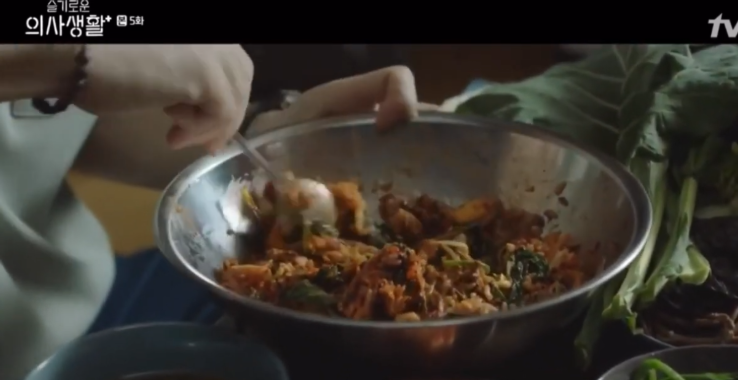
Hospital Playlist: Ahn Jeong Won eats the meal prepared by his mother Jung Ro-Sa.
Ingredients that make Bibimbap a healthy meal:
Rice: Carbohydrates
Spinach:
Rich source in iron
Food source in beta carotene (which our bodies turn into Vitamin A)
Mushroom: benefits according to UCLA health
“powerful source of ergothioneine, an amino acid and antioxidant that prevents or slows cellular damage”
Studies have shown that incorporating mushrooms into your diet can lower your risk of cancer
Naturally low in sodium
“contain compounds that inhibit the production of cholesterol, block cholesterol from being absorbed and lower the overall amount of cholesterol in your blood”
Source in Vitamin D → helps your body absorb calcium to maintain and build strong bones.
stimulates the growth of healthy bacteria with the use of prebiotics
Selenium, which helps your body make antioxidant enzymes to prevent cell damage.
Vitamin B6, which helps your body form red blood cells, proteins and DNA.
Cucumber
Several phytonutrients (plant chemicals) called lignans (may help prevent osteoporosis, heart disease, and some cancers)
Carrots
Rich source in beta carotene
Radish
Rich in vitamin C, fiber, potassium
Mung Bean Sprouts
packed with vitamins and minerals (vitamin c, vitamin k, folate, iron, potassium, magnesium)
Fiber
Protein
Pork
Protein
닭갈비 (Dakgalbi)
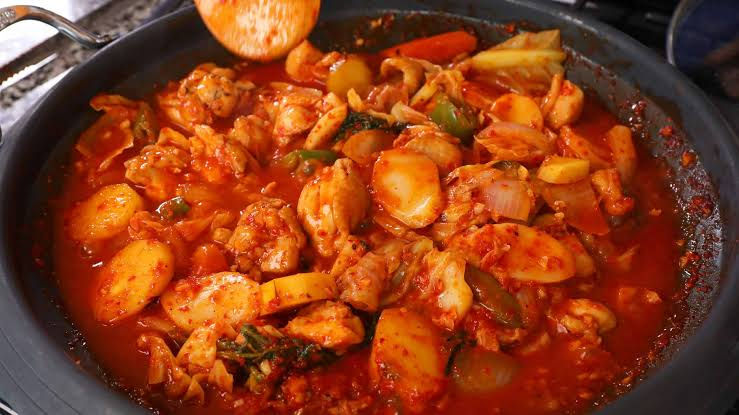
Dakgalbi directly translates to chicken ribs although it is actually made from chopped boneless chicken pieces instead of actual chicken ribs. It can be eaten with tteok (rice cakes), cabbage, and sweet potatoes. There is also a tradition in which it is eaten in a ssam (wrap) where it is wrapped in lettuce or perilla leaves. The meal traditionally ends with the remaining dakgalbi used to make bokkeumbap (where rice is stir fried in the leftover pan juices and bits)
Origin
The dish originated in the city Chuncheon as it was a city with many livestock farms where fresh chicken was easy to find. It started off as the “commoner’s galbi” for soldiers and students.
Present
It has now evolved into “a beloved cultural symbol of communal, tableside dining, regional pride, and working-class resilience” with the city of Chuncheon dedicating a whole street entirely dedicated to restaurants selling this single dish.
It is famously referenced in the Kdrama Signal and Misaeng: Incomplete Life as a favorite comfort meal for the characters.
Ingredients that make dakgalbi such a great meal:
Chicken:
Protein
Sweet potatoes: supports vision, immunity, improves digestion, sustains energy
Fibers
Protein
Vitamin A and C
Cabbage:
Vitamin K
Vitamin C
Fiber
Folate and Vitamin B6
해물파전(Haemul Pajeon)

Haemul pajeon also known as Korean pancakes or Korean Seafood Scallion Pancakes is made with scallions (파 = pa) and mixed seafood (haemul= 해물) and jeon (pan-fried (in light flour and egg batter)). There are a variety of types and variations of these pancakes such as: kimchi seafood pancake (kimchi-haemuljeon), dongnae pajeon, modern/western seafood pancakes, extra crispy/mixed seafood pancake.
Origin and Cultural Significance
It originated in Korea during the Joseon Dynasty. The dish is commonly eaten on rainy days with makgeolli (traditional rice wine) because it is said that the sizzling of the pajeon on the pan sounds like rain.
A great example of this is in the K-Drama Bon Appetite, Your Majesty:

The main character makes hameul pajeon after hearing the sound of rain. By doing so she is able to convince an inventor to make a pot as this dish was his hometown childhood dish.
Ingredients:
Scallions:
High amounts of vitamin K,C, A
Allicin (good for heart)
Fiber
Shrimp:
Protein
Astaxanthin Antioxidant: Fights cell damage, reduces inflammation, and supports brain and skin health
Selenium and Zinc: Boosts immune defense and supports thyroid function
Vitamin B12 and Iodine: Promotes red blood cell production, nervous system health, and proper metabolism.
Flour
carbohydrates
김치볶음밥 (Kimchi Fried Rice)
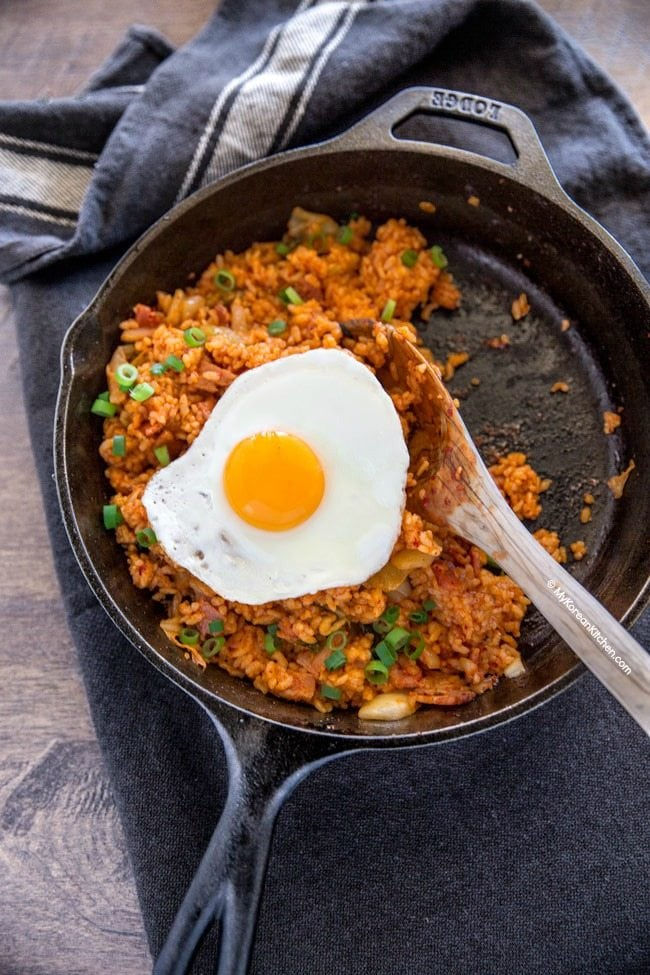
Kimchi bokkeumbap, which directly translates to, kimchi stir fried rice is exactly what it implies in its name. 볶음 (bokkeum meaning stir fried) and 밥(bap meaning rice).
Origin
It became a popular dish post Korean war in a time of food scarcity, Korean families needed practical ways to make meals using basic ingredients.
“Culturally, kimchi fried rice serves as an accessible everyday meal in South Korea, symbolizing familial thrift and the integral role of kimchi in national identity, where it transforms potential waste into a satisfying dish”. - Grokipedia.
Cultural Significance
Kimchi bokkeumbap is a dish with strong cultural significance within Korea’s history and has evolved as a simple, comfort food Koreans like to make at home
Some popular references of this dish is in Itaewon class when Park Saeroyi makes this dish at the Danbam pub as well as in reality shows with (such as SOOP with BTS).

Ingredients:
Kimchi:
Packed with probiotics, fiber, and vitamins A, C, and K
Supports gut health, boosts immune system, and helps reduce inflammation if eaten regularly
Rice:
Carbohydrates
Eggs:
Excellent source in protein and healthy fats
잡채 (Japchae)

Japchae is a famous Korean dish made of glass noodles, crisp vegetables, bulgogi, and often includes seasoning from soy sauce and sesame oil. The glass noodles are made from purely sweet potato starch.
Origin
It translates directly to “mixed vegetables” and it was created during the Joseon Dynasty for a royal banquet.
Present and Cultural Significance
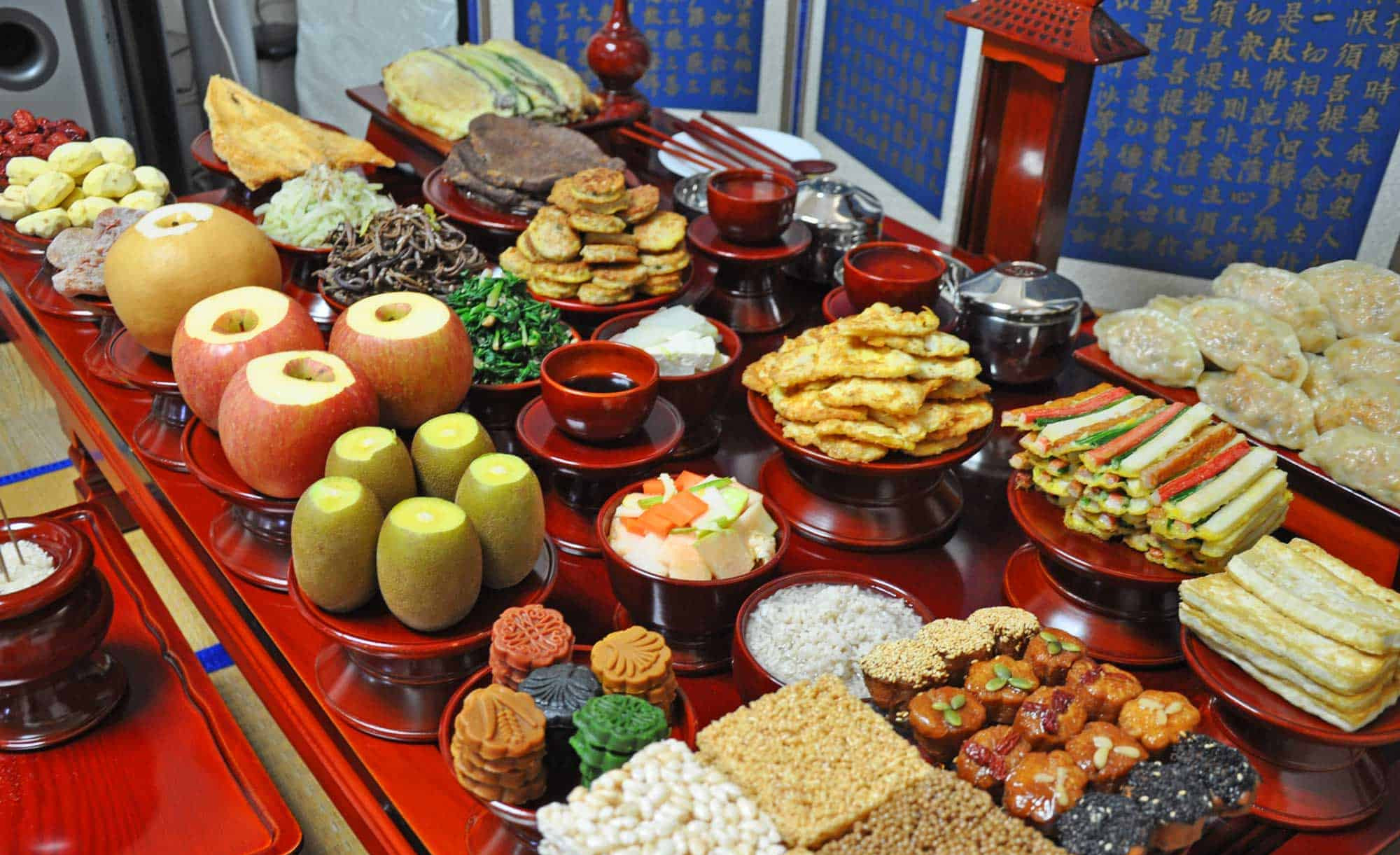
It is has now evolved to a meal that can be commonly enjoyed on a daily basis it also is commonly served during traditional parties and holiday food such as Lunar New Year (설날) and the Harvest Festival (추석).
Ingredients:
Sweet potato starch noodles:
Blood Sugar Control: They have a much lower glycemic impact than rice, wheat, or corn noodles, meaning they cause a slower, more gradual rise in blood sugar
Gluten free
Spinach:
rich in iodine
Mushrooms (as stated before)
“powerful source of ergothioneine, an amino acid and antioxidant that prevents or slows cellular damage”
Studies have shown that incorporating mushrooms into your diet can lower your risk of cancer
“contain compounds that inhibit the production of cholesterol, block cholesterol from being absorbed and lower the overall amount of cholesterol in your blood”
Source in Vitamin D → helps your body absorb calcium to maintain and build strong bones.
stimulates the growth of healthy bacteria with the use of prebiotics
Selenium, which helps your body make antioxidant enzymes to prevent cell damage.
Vitamin B6, which helps your body form red blood cells, proteins and DNA.
Beef:
protein
Comments